
How Do I Create Reliable Income
Year After Year—Without Running Out?

This is the question that sits quietly behind so many retirement conversations.
It doesn’t always show up as fear.
Sometimes it shows up as hesitation.
Or over-control.
Or a vague sense of “I should be fine… but I’m not actually sure.”
For many people approaching or living in retirement, this single question shapes how freely they live:
How do I create reliable income—year after year—without running out?
Not just income on paper.
Income you can trust.
Income that lets you say yes to life instead of constantly calculating what might go wrong.
The Three Jobs of Retirement Income
Here’s where retirement income planning often goes sideways:
People think in terms of accounts instead of jobs.
In reality, your retirement income has three distinct jobs, and each one matters:
1. Stability
This is your financial foundation. Income you can rely on regardless of markets, headlines, or interest rate cycles. Stability is what allows your nervous system to settle. It answers the question, “What’s always covered?”
2. Growth
Retirement can last 20–30+ years. Your money needs to continue working, not just sitting still. Growth helps protect purchasing power, offset inflation, and support later-life expenses without eroding your base.
3. Flexibility
Life doesn’t happen in straight lines. Health needs change. Opportunities arise. You may want to help family, travel more, or pivot how you live. Flexible income gives you options instead of constraints.
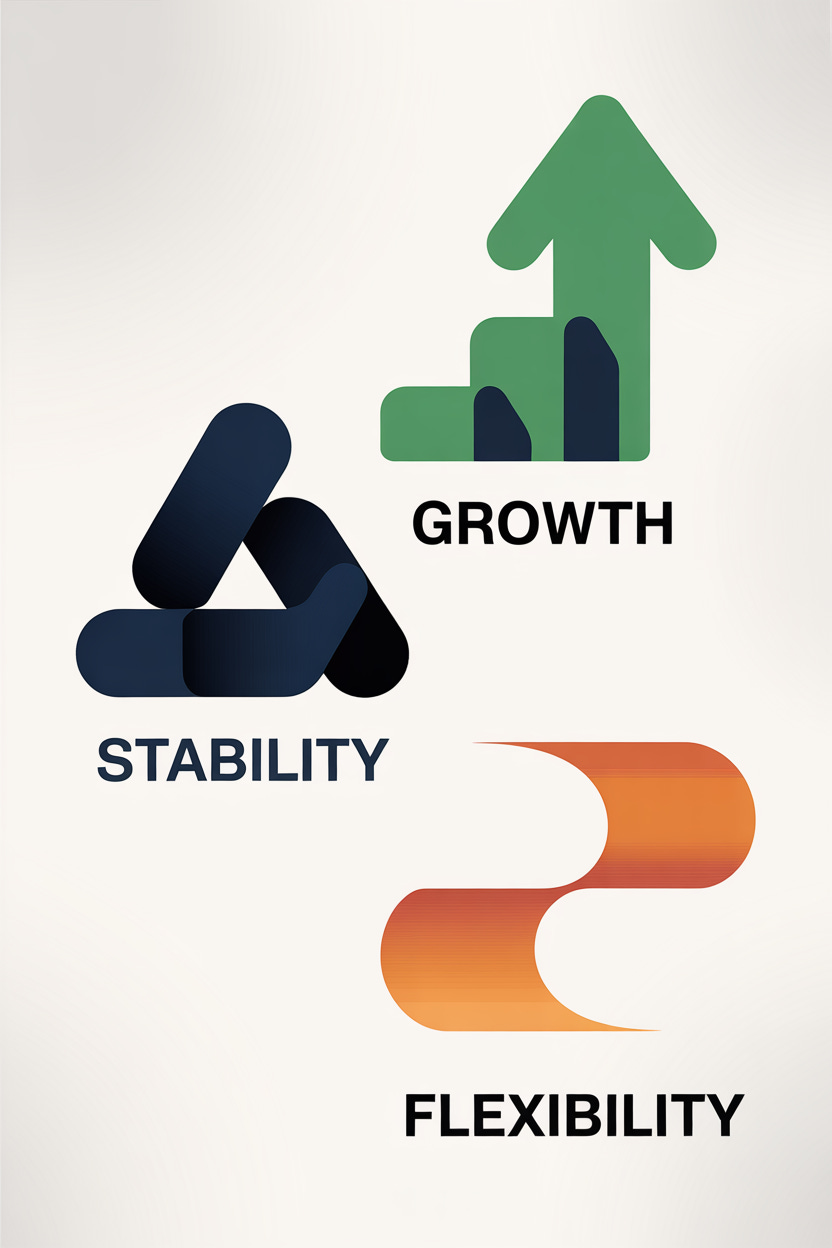
When these three jobs are clearly assigned and intentionally designed, something powerful happens.
You stop managing retirement like a fragile equation…
And start living it like a well-supported chapter.
The Emotional Cost of Financial Anxiety
When income feels uncertain, the toll isn’t just financial — it’s deeply personal.
Financial anxiety in retirement is linked to:
Chronic stress and elevated cortisol
Depression and emotional fatigue
Insomnia and persistent worry
Physical symptoms like high blood pressure and inflammation
It also strains relationships.
Money stress often leads to:
Increased conflict between partners
Emotional withdrawal and isolation
Different risk tolerances turning into resentment
Higher divorce rates later in life
At the root of this anxiety are a few familiar fears:
What if I outlive my savings?
What if healthcare or long-term care costs derail everything?
What if I have to start saying no to the life I imagined?


This is why retirement planning is never just about math.
It’s about emotional safety.
Good planning doesn’t make you rigid — it gives you choices.
It replaces penny-pinching anxiety with calm, informed decision-making.
Why Confidence Isn’t About Having “Enough”
Here’s where a fascinating insight comes in.
A June 15, 2025 article from Kiplinger explored the relationship between wealth, advice, and retirement confidence. The headline says it plainly:
“Financial Advice and Retirement Confidence: What’s Wealth Got to Do With It?”
The surprising conclusion?
Retirement confidence increases the most for people with moderate wealth who work with a financial advisor — not for those with the highest net worth.
According to the research:
Retirement confidence rises by roughly 20 percentage points for working households with less than $100,000 in total wealth when they use a financial advisor (controlling for age).
For households with more than $1 million in savings, retirement confidence shows almost no change with advice.
Read that again.
Confidence isn’t driven by having more money.
It’s driven by having clarity, structure, and guidance.

People feel better when someone helps them:
Assign roles to their money
Create dependable income streams
Understand tradeoffs and options
See a path forward instead of a foggy horizon
From Fear to Framework
This is why thoughtful retirement income planning is so transformative.
It’s not about chasing returns.
It’s about designing income that does its job — reliably and intentionally — so you can do yours.
When stability, growth, and flexibility are working together:
Anxiety softens
Conversations become easier
Decisions feel grounded instead of reactive
Life opens back up
Retirement was never meant to be a prolonged exercise in vigilance.
It’s meant to be a chapter supported by wisdom, foresight, and the freedom that comes from knowing you’ve built something sustainable.
The real question isn’t “Do I have enough?”
It’s:
“Do I have a plan that lets me live well — without fear — for as long as I’m here?”
If this article stirred questions — or helped you name worries you’ve been carrying quietly — you don’t have to sort them out alone.
I offer conversation-first retirement income consultations designed to help you:
Clarify where your income will come from
Understand what’s stable, what can grow, and what stays flexible
Replace “Am I doing this right?” with a clear, grounded plan
No pressure. No product push. Just clarity.
If you’re curious, book a time that works for you, and let’s start with a conversation.