

Retirement Is a Mindset Shift Before It Is a Lifestyle Change

Most people prepare for retirement by asking practical questions:
Do I have enough money?
Where will I live?
How will I spend my time?
When should I leave work?
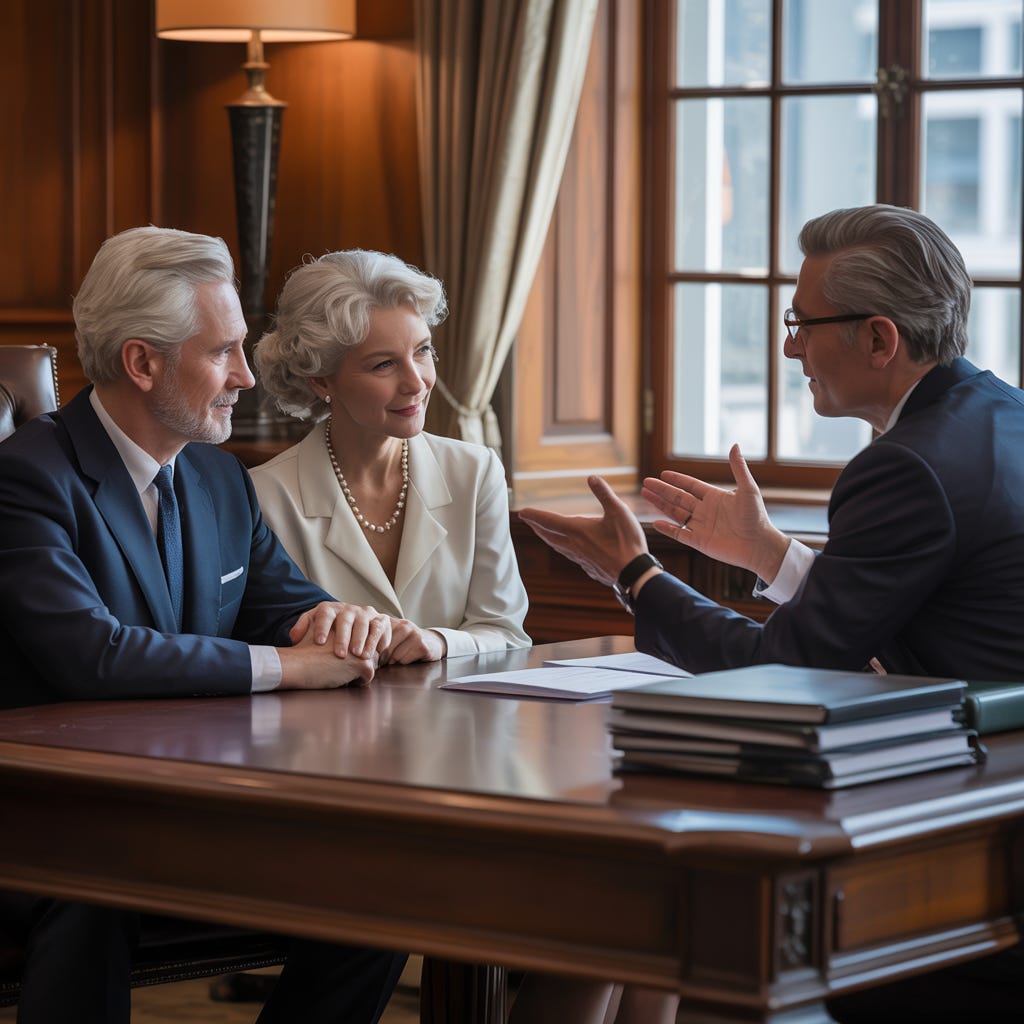
These questions matter. But beneath them lies another question—one that may ultimately shape the entire retirement experience:
Who will I be when I am no longer the person I have been for most of my adult life?
Retirement changes far more than our schedules. It changes how we see ourselves, how others see us, and how we understand our place in the world.
That is why the transition into retirement begins in the mind.
The Old Retirement Mindset
For generations, retirement was portrayed as a finish line.
You worked hard. You saved. You reached a certain age. Then you stepped away from productive life and enjoyed your well-earned rest.
There is nothing wrong with resting. After decades of responsibility, rest can be deeply restorative.
But a life built entirely around rest can eventually begin to feel surprisingly empty.
The traditional retirement mindset tells us:
Your most productive years are behind you.
Your professional identity is no longer relevant.
It is time to withdraw rather than contribute.
Your primary purpose now is to relax.
Aging means becoming less capable, visible, and valuable.
Even when we consciously reject those ideas, they can linger quietly beneath the surface.
We may find ourselves thinking:
~ Shouldn’t I be satisfied?
~ Why don’t I feel happier?
~ What am I supposed to be doing now?
~ Does anyone need what I know anymore?
These are not signs that retirement has failed.
They are signs that a transition is taking place.
The Neutral Zone Between Identities
When we leave a long-held role, the old identity does not disappear neatly on our final day of work—and the new one does not arrive fully formed the next morning.
There is often an uncomfortable space between them.
You are no longer who you were, but you are not yet certain who you are becoming.
This in-between period can feel like confusion, restlessness, grief, or even a loss of confidence. Without understanding what is happening, people may try to fill the space as quickly as possible.
They become busier. They take on obligations they do not really want. They attempt to recreate their work schedule. Or they convince themselves they should simply be grateful and stop asking for more.
But the in-between space is not something to escape.
It is where the next version of your life begins to take shape.
The uncertainty is not evidence that you are lost. It may be evidence that you are growing.
From Traditional Retirement Thinking to Third Age Thinking
Traditional retirement thinking asks:
How do I fill the years I have left?
Third Age Thinking asks:
What do I want to create with the years ahead?
That shift changes everything.
Instead of viewing retirement as a withdrawal from meaningful life, we can see it as an opportunity to redeploy ourselves.
We can take everything life has given us—our knowledge, experience, resilience, relationships, curiosity, and wisdom—and decide how we want to use it now.
Because the skills do not retire.
The job retires.
Your title may disappear, but your ability to solve problems does not. Your position may end, but your capacity to lead, mentor, create, nurture, learn, and contribute remains.
The real work of the retirement transition is learning to separate who you are from the role you once performed.
You are not beginning this chapter empty-handed.
You are arriving with a lifetime of raw material.
The Stories We Carry Into Retirement
Our experience of retirement is shaped by the stories we tell ourselves about it.
Perhaps your story is:
Without my career, I won’t matter as much.
Or:
At my age, it is too late to begin something new.
Maybe it sounds like:
I should be happy simply relaxing.
Or:
If I don’t know exactly what comes next, something must be wrong.
These stories can become invisible boundaries around our future.
A retirement mindset does not change because we repeat cheerful affirmations or pressure ourselves to “think positively.” It changes when we become curious about the beliefs guiding our choices.
Is this belief true?
Is it still useful?
Did I choose it—or inherit it?
What might become possible if I stopped organizing my life around it?
A new chapter requires more than a new schedule. It requires a new story.
You Are Still Becoming
One of the most limiting ideas about aging is that at some point we become finished products.
We do not.
As long as we are alive, we are capable of discovering new interests, building new relationships, developing new strengths, and making new contributions.
Retirement can be an invitation to ask questions that were difficult to hear during the busy working years:
~ What still calls to me?
~ What have I outgrown?
~ What part of myself have I neglected?
~ What do I want to carry forward?
~ What am I ready to release?
~ Who might I become without the expectations of my former role?
You do not need to invent an entirely new person.
You may simply need to reclaim parts of yourself that were set aside while you were busy meeting deadlines, raising families, building careers, and caring for everyone else.
The next version of you is not disconnected from the person you have been.
It is the continuation of that person—with more freedom to choose.
And Now… Drum Roll, Please
This is exactly why I created something new.
Not another retirement checklist.
Not another article telling you to travel more, find a hobby, or stay busy.
But an opportunity to pause, reflect, and experience the retirement transition from the inside.
Introducing the PATH Transition Interactive Experience.
Transition is the “T” in my PATH to Retirement Framework:
Purpose. Action. Transition. Harmony.
The Transition Experience is an interactive journey created to help you explore the deeper questions beneath life after work:
What are you ready to leave behind?
What deserves to come forward with you?
Which old stories may be limiting your future?
What strengths, skills, and wisdom are ready to be redeployed?
Who are you becoming now?
This is not a test, and there are no right answers.
It is a place to notice what stirs in you.
You may recognize a story you have been carrying without realizing it. You may rediscover a part of yourself that has been waiting for your attention. You may begin to see retirement not as the end of your useful life, but as the beginning of your most intentional one.
Your Next Chapter Begins With How You See It
You can enter retirement believing your best years are behind you.
Or you can enter it knowing that everything you have lived has prepared you for something that could not have happened any earlier.

That does not mean every part of the transition will be easy. Endings involve loss. Identity takes time to reshape. The future may remain unclear for a while.
But uncertainty and possibility often arrive together.
You are not starting over.
You are starting from experience.
And your greatest retirement asset may not be your financial account. It may be the person you have spent a lifetime becoming.
I invite you to step inside the PATH Transition Interactive Experience and begin exploring what this next chapter might hold.
Enter the Transition Experience
Your job may retire. Your skills, wisdom, curiosity, and capacity to contribute do not.
Because you are not finished.
You are transitioning.
And because Becoming never gets old.